 2025, Vol. 44
文章信息
- 徐应怡, 汪子贵, 尚瑞鹏, 张强, 段莉莉, 齐学洁
- XU Yingyi, WANG Zigui, SHANG Ruipeng, ZHANG Qiang, DUAN Lili, QI Xuejie
- 纳米粒递送中药活性成分在癌症治疗中的应用研究进展
- Research progress on nanoparticle-delivered active ingredients from traditional Chinese medicine for cancer therapy
- 天津中医药大学学报, 2025, 44(7): 661-672
- Journal of Tianjin University of Traditional Chinese Medicine, 2025, 44(7): 661-672
- http://dx.doi.org/10.11656/j.issn.1673-9043.2025.07.13
-
文章历史
收稿日期: 2025-04-03


癌症在全球范围内具有较高的发病率和病死率,其发展是一个多过程事件,涉及遗传和细胞水平上的各种异常[1]。常用的抑制癌症复发和治疗癌症的方法包括放射治疗、化学治疗、手术、糖皮质激素治疗、靶向治疗和免疫治疗等,但这些方法通常伴随严重不良反应、耐药性和高复发风险[2]。
中药来源丰富,具有作用靶点多、药理作用广、毒副作用低等优势[3],可以通过诱导肿瘤细胞凋亡、抑制肿瘤血管生成、增强机体免疫力和下调免疫抑制分子等方式治疗癌症[4]。常用于治疗癌症的中药包括活血化瘀类、清热解毒类、益气养血类等[5]。这些中药的治疗效果主要归功于其活性成分,包括糖类、苷类、萜类、黄酮类、生物碱类和皂苷类等[6]。其中具有代表性的中药活性成分如槲皮素(QUE)[7]、姜黄素(CUR)[8]、紫杉醇(PTX)[9]、白藜芦醇(RSV)[10]等。然而,由于中药活性成分的复杂性及其不同的理化特性,存在溶解度差、半衰期短和在环境中不稳定等劣势[11]。因此,随着纳米技术的不断发展,关于新型纳米药物载体递送中药活性成分治疗癌症的研究层出不穷。
纳米制剂作为新兴领域,依赖纳米颗粒的尺寸、形状和核心成分,从而影响细胞有效摄取、血液循环半衰期和肿瘤渗透性[12]。纳米粒(NPs)是一种由直径1~1 000 nm的颗粒组成的胶体药物递送系统[13],因其较小的尺寸和较大的比表面积具有优越的化学、光学、磁性和机械性能,在生物传感器、组织工程、药物递送领域应用广泛[14]。基于NPs的药物递送系统可以通过调节药物的油水分配系数、提高药物的生物利用度、靶向给药等方式克服药物本身的缺点,实现按需精准释放药物和多种药物/诊断剂的共同递送[15]。文章聚焦各类NPs的性质,对使用NPs作为药物载体递送中药活性成分在癌症治疗方面的应用进行系统综述,期望能够为新型中药制剂开发和应用提供理论基础,为癌症治疗提供新选择。
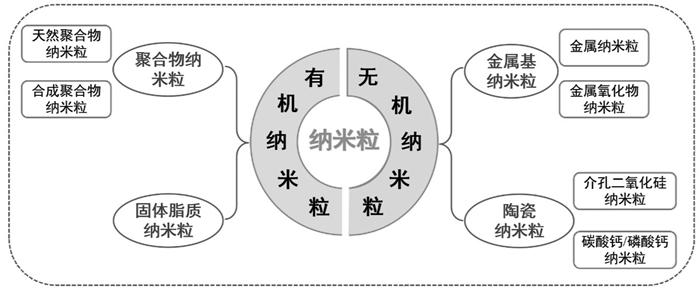
1 NPs概况 1.1 NPs的分类NPs根据其组成可以分为有机NPs和无机NPs(图 1),其中有机NPs主要包括聚合物NPs和固体脂质纳米粒(SLN);无机NPs主要包括金属基NPs和陶瓷NPs[16-17]。
|
| 图 1 NPs的分类 |
聚合物NPs是由聚合物引发的纳米级胶体颗粒,平均粒径在100~1 000 nm[18],具有较低的毒性和良好的生物相容性,其较大的比表面积可以提高负载药物的溶出度,在局部给药时持续释放药物并改善皮肤渗透性,口服给药时能够保护药物不被降解并将其递送至胃肠道内最佳区域,也可以通过表面修饰和配体缀合等方式实现跨越血脑屏障的药物递送[19-20]。制备聚合物NPs的常用方法包括微乳液聚合、自由基聚合、纳米沉淀法和喷雾干燥法等[21]。根据制备材料的不同可以将聚合物NPs分为天然聚合物NPs与合成聚合物NPs[22]。
天然聚合物NPs常用的制备材料主要有壳聚糖(CS)及其衍生物[23]、海藻酸盐[24]、白蛋白[25]、透明质酸(HA)[26]等。该类NPs在进入体内后,可以被酶降解为低聚物和单体,具有保证治疗效果的同时降低药物毒性、增强药物渗透性和吸收性等特点[27-28]。离子凝胶化制备的CS NPs粒径通常在200~500 nm,具有较好的稳定性、膜渗透性和生物黏附性,能够促进药物在体循环内的分布,增强肠道对药物的吸收能力[29-30]。
合成聚合物NPs的常用制备材料有聚乳酸(PLA)、聚乙二醇(PEG)、聚乙烯酸、聚乳酸-羟基乙酸共聚物(PLGA)等[31]。该类NPs具有灵活性好、可重复性、可伸缩性和机械性能较易控制等特点,也可以根据所需的生物医学应用对其进行修饰和功能化处理[32]。其中,PEG化NPs因为能够提高其表面亲水性和空间稳定性、显著延长血液循环半衰期、增强肿瘤靶向性[33-34]等优势而被广泛研究。
采用天然和合成聚合物的组合设计,可以达到控制NPs的特性和递送效率的目的[35]。Ye等[36]采用闪蒸纳米沉淀技术,在PEG-PLA NPs基础上设计引入玉米醇溶蛋白,制备得到玉米醇溶蛋白结合PEG-PLA NPs用于递送PTX。玉米醇溶蛋白的引入使NPs形成独特的疏水内部,增强了PTX和NPs之间的相互作用,显著提高了PTX的包封率和累积释放率。此外,刺激响应条件如温度、pH、氧化还原、电场/磁场、酶的引入也可以提高聚合物NPs的结构多样性,使其能够特异性响应肿瘤微环境,达到精准递送、靶点治疗的目的,近年来在中药活性成分的递送领域备受瞩目[37-38]。
1.2.2 固体脂质纳米粒(SLN)SLN是在室温和体温条件下保持固态的生理脂质构成的固体胶粒给药系统,平均粒径在50~100 nm[39],可以降低药物到脂质基质的流动性,防止颗粒聚集而提高稳定性,能够绕过首过代谢,显著提高疏水性药物的生物利用度,实现药物的持续释放[40]。微乳液法是制备SLN的常用方法,选择合适的固体脂质核心材料和表面活性剂是本法的关键[41]。因此,固体脂质核心材料的熔点需要高于体温且具有良好的生物相容性,常用的有甘油单酯、甘油二酯、脂肪酸、硬脂酸和蜡等[42]。与聚合物NPs类似,PEG化可以稳定SLN并调节其细胞摄取动力学,从而提高药物治疗效果[43]。此外,在SLN表面使用6-磷酸甘露糖、人血清白蛋白、N-羧甲基CS等不同的配体修饰,可以与转运蛋白高度结合,实现SLN介导的主动药物递送[44-46]。
1.2.3 金属基NPs金属基NPs是以金属及其氧化物为材料合成的NPs,包括金纳米粒(AuNPs)、银纳米粒(AgNPs)和磁性纳米粒(MNPs)等[47]。AuNPs和AgNPs的粒径常小于100 nm,能够穿过毛细血管甚至血脑屏障,尤其是在大小为5~80 nm的球形AgNPs具有较好的溶解性和药理性质[48],并通过诱导活性氧(ROS)产生、降低线粒体功能、释放乳酸脱氢酶和调节凋亡蛋白等方式治疗各类癌症[49-52]。MNPs是由以铁(Fe)为主的金属及其氧化物制备而成,粒径范围通常在1~100 nm[53],能够诱导肿瘤细胞凋亡和自噬,增强主要的成像策略,并通过尼尔和布朗弛豫将电磁能转化为热能而适用于热疗,在治疗癌症和检测癌症特异性标志物方面有巨大应用潜力[54-55]。但MNPs的理化性质较差,常使用有机材料包裹以增强本身性能并赋予其新性能[56]。颗粒类型、尺寸、表面电荷、表面涂层等因素均会影响金属基NPs的药物代谢动力学。研究表明,尺寸小、带负电荷并且具有适当涂层的金属基NPs具有更好的生物利用度[57]。生物合成是制备金属基NPs的常用方法,其中以药用植物提取物作为还原剂和封端剂制备的金属基NPs具有无毒、粒径小、产量高、分散性好等特点[58]。如使用植物多酚还原铂离子(Pt4+)得到粒径小于4 nm的铂纳米粒(PtNPs)[59],采用桂圆菊水提取物作为还原剂获得粒径45~60 nm的球形AgNPs[60],以山茱萸水提取物果实为还原稳定剂得到平均粒径为11.7 nm的AgNPs[61]。
1.2.4 陶瓷NPs陶瓷NPs是由二氧化硅、氧化铝、碳酸盐、磷酸盐等无机化合物制备而成的NPs[62]。其中介孔二氧化硅纳米粒(MSN)是以二氧化硅为材料的一种药物递送载体,粒径范围为2~30 nm[63],其多孔结构为多种生物分子和治疗剂提供了容纳和释放的空腔,表面高密度的硅烷醇基团有利于后续的功能化[64],可以通过溶胶-凝胶法制备[65]。无定形磷酸钙NPs(1~200 nm)和碳酸钙NPs(1~500 nm)具有出色的生物相容性、可降解性和pH响应性,是理想的钙离子供应者,可以使钙离子异常积累,导致钙超载引发细胞死亡,常用共沉淀法、机械化学法、气体扩散法制备[66-69]。Li等[70]采用气体扩散法制备负载山柰酚-3-O-芸香苷(KAE)的碳酸钙NPs,该NPs具有均匀的尺寸、良好的分散性和pH响应性,能够特异性释放KAE与钙离子,引发钙超载损伤线粒体,从而引起细胞骨架崩溃和氧化应激,导致细胞凋亡。
2 NPs递送中药活性成分在癌症治疗中的应用癌症的早期检测和有效治疗一直都是全世界研究的热点话题。NPs以其尺寸微小及形状可变特性,为抗击癌症提供了先进的诊断、治疗和预后工具。使用NPs作为药物载体递送中药活性成分,可以改善其口服吸收和生物利用度,增强生物屏障渗透性,克服多重耐药性,持续靶向释放药物,在对抗乳腺癌(BC)、肺癌、结直肠癌(CRC)、肝细胞癌(HCC)和胰腺癌等方面均有较为广泛的应用[71-72]。
2.1 BCBC是女性最常诊断出的癌症类型,也是导致癌症患者死亡的第二大原因[73]。蒽环类药物和紫杉烷类药物被广泛用于BC的辅助与新辅助治疗,将这两类药物包封在聚合物NPs中是靶向BC的有效方式[74]。PTX是从红豆杉中提取的紫杉烷二萜类天然产物,是治疗BC的一线化学治疗药物[75]。白蛋白NPs是一种多用途蛋白质纳米载体,PTX结合白蛋白NPs制剂可以降低毒性并提高抗癌症活性,美国食品药品监督管理局(FDA)等监管机构已经批准该制剂用于治疗转移性BC[76-77]。Cabeza等[78]以乳腺癌细胞系,乳腺癌干细胞(CSCs)和多细胞肿瘤球体为研究对象,证明PTX-PLGA NPs能够显著增加E0771、MCF-7、MCF-10A、MDA-MB-231、CSCs细胞毒性,使小鼠的肿瘤体积减小,并增加小鼠肺、肝和脾脏中的PTX药物积累,在BC治疗中具有巨大应用潜力。齐墩果酸(OA)是一种具有优异抗肿瘤活性的天然五环三萜类化合物,Bao等[79]将PTX负载到OA NPs中得到PTX-OA NPs发挥药物协同作用,对MDA-MB-231-WT、MDA-MB-231-BR和MCF-7细胞均具有抑制作用,并且可以显著抑制小鼠异种移植肿瘤生长,是非侵入性疗法与化学疗法相结合治疗原发性BC和BC脑转移瘤的一种潜在新方案。
三阴性乳腺癌(TNBC)是一种侵袭性癌症,容易转移和复发[80]。研究表明RSV通过调节磷酸肌醇3-激酶(PI3K)/蛋白激酶B(AKT)、鼠肉瘤病毒癌基因同源蛋白(RAS)/RAF/细胞外信号调节激酶(ERK)信号通路等途径表现出治疗TNBC的潜力,使用NPs递送RSV可以提高其生物利用度、内化到TNBC细胞、配体特异性靶向肿瘤部位、逆转多重耐药性[81]。Bozorgi等[82]制备了负载RSV的CS NPs,发现该NPs通过靶向线粒体代谢并诱导内在凋亡途径,抑制MDA-MB-231细胞增殖。异甘草素(ISL)是主要来源于甘草的黄酮类化合物,具有显著的抗TNBC活性,但溶解度低限制了其临床应用[83]。Wang等[84]制备得到负载ISL的玉米醇溶蛋白磷脂酰胆碱杂化NPs(ISL@ZLH NPs),与游离ISL相比,ISL@ZLH NPs对MDA-MB-231、BT-549、4T1、MCF-10A细胞具有更强的抗增殖和抗集落形成作用,并且显著抑制了MDA-MB-231异种移植小鼠的肿瘤生长,是一种潜在治疗TNBC的口服给药系统。
2.2 肺癌肺癌是世界上极难治愈的恶性肿瘤之一,每年约有160万人因此死亡,总体5年生存率仅为15%,吸烟和空气污染是导致肺癌的主要原因[85]。根据组织学特征,肺癌可以分为小细胞肺癌(SCLC)和非小细胞肺癌(NSCLC),其中约85%的肺癌病例为NSCLC[86]。Song等[87]制备得到负载杨梅素的MSN,采用叶酸进行修饰并与多药耐药蛋白(MRP-1)结合,实验结果表明该纳米平台显著降低A549和NCI-H1299肺癌细胞的存活率,上调裂解的半胱天冬酶-3(Caspase-3)和聚腺苷二磷酸核糖聚合酶(PARP)表达水平,是一种治疗NSCLC的新颖有效平台。
大多数抗癌症药物在直接治疗肺癌时的全身毒性和耐药性无法避免[88],使用NPs共载抗癌症药物和中药活性成分可以降低毒副作用,克服耐药性,发挥更强大的抗肿瘤作用[89]。Ganthala等[90]使用SLN共载厄洛替尼(FDA批准的肺癌治疗药物)和QUE,结果表明该SLN对A549和A549/ER细胞均有细胞毒性,并且显著诱导厄洛替尼耐药性A549/ER细胞的凋亡,是治疗肺癌的潜在药物载体。Kim等[91]开发了注射用CUR和阿霉素(DOX)共载的白蛋白NPs,结果表明该NPs因为共载两种药物使得DOX的剂量减小,毒副作用降低,对B16F10细胞具有显著的细胞毒性,并且在B16F10肺转移诱导的小鼠模型中表现出优越的抗肺癌作用。
2.3 CRCCRC是全世界极其常见与致命的恶性肿瘤之一,表现为结肠或直肠黏膜的恶性肿瘤,其高发病率与生活方式改变有关。由于高转移负担和化学治疗耐药性,CRC的诊断相对较晚且治疗效果差[92]。使用NPs作为药物载体可以减少在CRC治疗中药物的不良反应,改善药物的溶解性、药代动力学和生物学分布[93]。Mohamed等[94]制备了负载QUE的SLN,发现超过(41.12±1.60)%的QUE在48 h内从SLN中逐渐释放,并主动靶向Caco-2细胞,引起细胞凋亡。Sood等[95]制备了氧化还原响应性CS/硬脂酸NPs(CSSA NPs)用于共同递送DOX和CUR,体外实验表明,CSSA NPs的生物相容性良好,负载DOX和CUR后可以有效杀死HCT116细胞,口服给药后在小鼠结肠区滞留长达24 h,在治疗CRC领域具有一定前景。
光动力疗法(PDT)不仅可以快速和准确杀伤肿瘤细胞,还具有促进抗肿瘤免疫应答的潜力[96]。中药活性成分与PDT联用是治疗CRC的一种新选择。研究表明从黄芪中提取的活性成分黄芪甲苷Ⅲ(As)可以激活天然免疫自然杀伤细胞(NK细胞),在不致敏的情况下杀灭肿瘤[97]。Wu等[98]构建了PEG化的MSN,负载As和二氢卟吩e6(Ce6)作为免疫激活剂、光敏剂和成像剂。结果表明,在660 nm激光照射下,PDT诱导CT26细胞凋亡,释放肿瘤相关抗原,引发适应性免疫反应,并且聚集肿瘤微环境中的NK细胞;由于肿瘤内转录因子T-bet高表达,As激活NK细胞增强了先天免疫反应,这种多功能光动力平台具有免疫治疗结肠癌的巨大潜力。
2.4 HCCHCC是肝癌中最常见的一种类型,由于肝功能差、肿瘤体积大或血管浸润等原因使得治疗方法有限,且术后5年复发率高,严重影响患者的生存和生活质量[99]。索拉非尼是一种治疗HCC的全身化学治疗药物,其耐药性与激活的肝星状细胞(HSC)密切相关[100]。天然药物木犀草素具有缓解HSC活化的作用,Ye等[101]制备了负载木犀草素的PLGA NPs,并且使用人肝癌细胞(HepG2)外切体包被形成仿生NPs,体内外实验表明,该纳米平台逆转了HepG2细胞对索拉非尼的耐药性,显著抑制HepG2/人肝星状细胞(Lx2)皮下移植瘤生长。
人参皂苷Rh2是中药人参的主要活性成分,具有抗肿瘤、抗炎和免疫调节等药理作用[102]。Xu等[103]构建了一种pH和氧化还原双重响应型NPs,在pH值为5.5和谷胱甘肽(GSH)刺激下可以有效递送人参皂苷Rh2,并对HepG2细胞具有较高的细胞毒性,表现出较游离人参皂苷Rh2更强的肿瘤选择性、更长的体循环半衰期和更高的生物利用度。研究表明,CUR通过促进ROS产生和调节转化生长因子β1(TGF-β1)/Smad家族成员3(Smad3)信号通路抑制各种肝癌细胞系的增殖并诱导HepG2细胞凋亡[104]。Zheng等[105]设计了可注射用的聚合物NPs共载CUR和RSV,并用肽SP94修饰颗粒表面以增强主动靶向性,结果表明该纳米平台显著降低了药物毒性,并且使两种药物发挥协同作用,有效诱导HepG2细胞凋亡,抑制小鼠体内肿瘤生长,为HCC的治疗提供了一种新策略。
CD133是肝癌干细胞的重要表面标志物之一,Jin等[106]以CD133抗体和聚精氨酸修饰负载PTX的NPs,该NPs在体外对HepG2和HuH7肝癌细胞表现出明显的细胞毒性。去唾液酸糖蛋白受体(ASGPR)是肝细胞特异性表达的受体,乳糖残基与ASGPR具有高亲和力[107]。Bian等[108]制备了具有pH响应性的乳糖基化球形NPs,共同递送索拉非尼和CUR。各项实验结果表明,该NPs在pH值为5.5时,释放超过80%的药物,且两种药物表现出协同作用。使用乳糖修饰后的NPs细胞毒性显著提升,对HCC肿瘤抑制率达到77.4%,是一种前景可观的HCC靶向治疗系统。
2.5 胰腺癌胰腺癌是低血管通透性肿瘤之一,具有早期转移、病死率高、结缔组织广泛增生和对放射治疗、化学治疗抵抗的特点[109]。吉西他滨是一种用于胰腺癌的金标准化学治疗药物,但其具有严重的全身不良反应以及耐药性,且疗效并不及时[110]。因此,PTX的一种纳米白蛋白结合制剂“Abraxane”与吉西他滨联合使用,已经成为目前治疗胰腺癌的一线药物[111]。
MNPs表现出强磁化率效应和图像特征,可以实现多路成像和靶向治疗[112]。有研究发现,使用超顺磁性氧化铁NPs递送CUR至肿瘤部位后,HPAF-Ⅱ和Panc-1细胞对吉西他滨的摄取和敏感性增强,从而生长和迁移受到抑制,此方法具有克服吉西他滨耐药性的潜力[113]。Ren等[114]制备了PEG包覆和花青素Cy7功能化的四氧化三铁(Fe3O4)NPs,负载中药活性成分大黄素,结果显示该NPs对BxPC-3细胞具有较强的细胞毒性,但对人正常胰腺导管hTERT-HPNE细胞毒性较小,并且在胰腺肿瘤异种移植小鼠模型实现了靶向治疗和FI/MRI双模态成像。
声动力疗法(SDT)是一种非侵入性癌症治疗技术,通过使用声敏剂进行低强度超声辐射,因其高组织穿透性能从而实现更深的肿瘤破坏和化学治疗药物的靶向摄取,NPs的介入可以有效提高SDT效率[115]。Ilbeigi等[116]首次构建Se-PEG-CUR NPs作为一种新型的胰腺癌体外SDT声敏剂,实验结果表明,Se-PEG-CUR NPs可以与吉西他滨协同治疗,主要通过产生ROS和诱导ASPC1细胞凋亡,有效用于胰腺癌的SDT治疗。
2.6 其他癌症恶性黑色素瘤是导致年轻人死亡极其常见的癌症之一,可以通过手术切除,但在转移扩散后,治愈的几率和存活率急剧下降[117]。CS NPs凭借非免疫原性、多功能性、高稳定性和低成本特点,递送中药活性成分治疗黑色素瘤的吸引力正在急剧上升[118]。Ibrahim等[119]制备了负载百里醌(TQ)的PLGA NPs,发现其具有TQ的快速释放性、细胞系中的低稳定性和对黑色素细胞较高的毒性。
与乳腺癌、肺癌等“全身性”肿瘤略有不同,胃癌是一种“局限性肿瘤”,局部转移是最严重的不良预后因素[120]。各项实验研究已经证实,使用SLN、PLGA NPs、聚多巴胺表面改性的NPs等递送PTX、白杨素、CUR、芦荟苷等药物,均对治疗胃癌具有一定潜力[121-122]。
卵巢癌是最致命的妇科恶性肿瘤,其治疗方法少、预后效果差[123]。Jagdale等[124]制备了N-乙酰基-d-葡萄糖胺功能化的PTX-SLN,可以与葡萄糖转运蛋白1(GLUT1)转运蛋白相互作用,绕过健康细胞并且抑制转运蛋白的过度表达,对OVCAR-3和SKOV-3卵巢癌细胞具有较高的细胞毒性,是一种靶向治疗卵巢癌的潜在方法。表 1列举了使用NPs递送中药活性成分对各类癌症的治疗作用及其优势。
| 类型 | 递送药物 | 癌症类型 | 癌细胞系 | 体内外实验 | 优点 | 参考文献 |
| OA NPs | PTX | BC | MDA-MB-231-BR、MDA-MB-231-WT、MCF-7 | 体外释放、细胞毒性、细胞摄取;体内抗肿瘤作用 | 载体本身具抗肿瘤活性,可以发挥药物协同作用 | 79 |
| HA功能化羧甲基CS-磷酸钙杂化NPs | CUR | BC | MDA-MB-231、4T1 | 体外释放、生物相容性、细胞毒性、细胞摄取等;体内成像、生物分布、抗肿瘤作用 | pH响应性;CUR和Ca2+的联合释放显示最佳肿瘤抑制效果 | 125 |
| CS NPs | RSV | TNBC | MDA-MB-231 | 体外释放、细胞毒性、细胞凋亡 | 持续释放RSV;在较低浓度和半数抑制浓度(IC50)条件下抑制细胞增殖 | 82 |
| 玉米醇溶蛋白磷脂酰胆碱NPs | ISL | TNBC | MDA-MB-231、4T1、BT-549 MCF-10A | 体外释放、细胞摄取、细胞毒性;体内抗肿瘤作用 | 毒性小、稳定性好;显著提高ISL的口服生物利用度 | 84 |
| SLN | QUE | TNBC | MCF-7、MDA-MB-231 | 体外释放、细胞毒性、克隆形成实验等;绒毛尿囊膜(CAM)测定 | 尺寸均匀、稳定性好;72 h内持续释放QUE;显著提高QUE的生物利用度 | 126 |
| MSN | 杨梅素 | 肺癌 | NCI-H1299、A594 | 体外释放、细胞摄取、集落形成等;体内抗肿瘤作用、成像、生物分布、药物代谢动力学 | 持续释放杨梅素;高细胞摄取能力;优异的抗肿瘤特性;低毒性 | 87 |
| SLN | 厄洛替尼、QUE | 肺癌 | A549、A549/ER | 体外释放、细胞毒性、细胞凋亡、细胞摄取、实时荧光成像、生物分布等 | 药物协同作用;具有抗多药耐药性 | 90 |
| 白蛋白NPs | DOX、CUR | 肺癌 | B16F10 | 体外释放、细胞毒性、细胞凋亡、细胞摄取;体内抗肿瘤作用 | 药物协同作用;联合化学治疗 | 91 |
| 脂质包被的磷酸钙NPs | 冬凌草甲素 | 肺癌 | A549 | 细胞摄取、细胞活力;体内组织分布、体内抗肿瘤作用 | 缓释药物;pH响应性;表面修饰改变细胞内化 | 127 |
| SLN | QUE | CRC | Caco-2 | 体外释放、细胞毒性、细胞凋亡 | 尺寸均匀;药物在48 h内持续释放,可以实现药物延迟释放 | 94 |
| CS/硬脂酸NPs | DOX、CUR | CRC | HCT116 | 体外释放、细胞毒性、细胞摄取、生物分布 | 氧化还原响应性;双重药物靶向释放 | 95 |
| PEG-MSN | As、Ce6 | 结肠癌 | CT 26 | 体外释放、细胞毒性、细胞摄取等;体内肿瘤荧光成像、协同免疫治疗 | 可以实时跟踪NPs聚集,实现PDT和免疫治疗相结合 | 98 |
| PEG包覆Fe2O3 NPs | 水飞蓟宾 | 结肠癌 | HT-29 | 体外释放、细胞毒性、细胞形态、细胞周期等 | pH响应性;剂量依赖性抑制细胞增殖 | 128 |
| 仿生PLGA NPs | 木犀草素 | HCC | HepG2 | 体外释放、细胞摄取、耐药性研究;体内抗肿瘤作用 | 可以有效缓解索拉非尼耐药;具有协同抗肿瘤作用 | 101 |
| α-硫辛酸缀合、普鲁兰多糖NPs | 人参皂苷Rh2 | HCC | HepG2 | 体外释放、细胞毒性、细胞摄取、细胞凋亡等 | pH和氧化还原双重响应性;肿瘤选择性高、体循环半衰期长 | 103 |
| SP94修饰的聚合物NPs | CUR、RSV | HCC | HepG2 | 体外释放、细胞摄取、细胞凋亡;体内抗肿瘤作用、毒性、安全性、分布 | 给药剂量显著降低;缓释;提高药物生物利用度;无毒 | 105 |
| CD133和聚精氨酸修饰的NPs | PTX | HCC | HepG2、HuH7 | 体外释放、细胞摄取、流式细胞术、细胞存活 | 较高包封率;显著提高肝癌干细胞靶向性和治疗效果 | 106 |
| 乳糖基化球形NPs | 索拉非尼、CUR | HCC | HepG2/SFN、HepG2 | 体外释放、细胞毒性、细胞摄取等;体内抗肿瘤作用、组织分布、耐受性分析 | pH响应性;药物协同作用;低全身毒性 | 108 |
| 超顺磁性氧化铁NPs | CUR | 胰腺癌 | HPAF-Ⅱ、Panc-1 | 体外细胞摄取、细胞增殖、细胞迁移等;体内抗肿瘤、生物发光成像、免疫组织化学等 | NPs有效递送CUR至胰腺肿瘤,与GEM联合靶向肿瘤干细胞 | 113 |
| Fe3O4-PEG-Cy7 NPs | 大黄素 | 胰腺癌 | BxPC-3 | 体外细胞摄取、细胞毒性、细胞凋亡等;体内MRI、FI、组织学、体内抗肿瘤作用 | 磁化率效应强;生物相容性良好;可以实现胰腺癌被动靶向 | 114 |
| Se-PEG NPs | CUR | 胰腺癌 | ASPC1 | 体外细胞毒性、SDT评估、协同效应支配评估、ROS含量测定、细胞凋亡 | 作为新型声敏剂用于体外胰腺癌的SDT;与吉西他滨协同抗肿瘤 | 116 |
| PLGA NPs | TQ | 黑色素瘤 | A375 | 体外药物释放、细胞摄取、细胞毒性 | 持续释放TQ;增强肿瘤组织中的渗透性和保留效应 | 119 |
| SLN | 穿心莲内酯 | 头颈癌 | HIOEC、HN6、Leuk1、HN30 | 体外细胞活力、细胞周期分析、细胞凋亡、细胞摄取 | 显著提高穿心莲内酯的生物利用度和抗肿瘤活性 | 129 |
| CS NPs | 芦丁、桃叶珊瑚苷 | 胶质瘤 | U87 | 体外释放、细胞毒性、细胞凋亡、细胞摄取和竞争性测定 | 药物协同作用;低剂量且毒性较小情况下有效抑制肿瘤生长 | 130 |
| ZnO NPs | CUR | 口腔癌 | KB | 抗氧化活性实验、抗菌活性实验、抗肿瘤活性实验、基因表达 | ZnO与CUR具有协同抗肿瘤活性;是口腔健康干预综合治疗方法 | 131 |
NPs作为一种新兴技术,凭借突出的理化特性在中药制剂领域应用广泛。中药活性成分与NPs的联合应用是癌症治疗具有吸引力的选择之一,也为中医药现代化提供了新的动力和信心。然而,这种联合应用研究历史较短,存在一些难点和问题。
首先,由不同材料、条件和比例制备的NPs具有不同的尺寸、形状和特性,直接或间接影响其对疾病的治疗能力。因此,使用合适的筛选方法来确定NPs的最佳处方和最佳制备工艺,以获得其最佳性能是十分重要的。其次,由于中药成分的复杂性,需要深入研究其有效部位、配方、潜在毒性,以及更加有效的质量和安全性评价方法。此外,组分或中药配方的剂量通常高于单一成分,但目前大多数NPs的负载效率难以满足这一要求,所以NPs作为载体递送中药活性成分的研究大多集中在单体化合物上,而递送传统中药处方的研究相对稀缺。最后,关于NPs的释药机制研究目前主要集中在体外释放性能方面,但体内释药机制复杂多样,其药理作用和作用靶点还有待进一步探索。因此,需要对NPs进行全面的体内药物代谢动力学、药效学和药理学研究,以便更好地了解其体内代谢途径,确保NPs在临床应用中的安全性和有效性。
纳米技术是癌症治疗范围内发展较快的领域之一,具有巨大的市场潜力,将成为21世纪的主导新技术。中医药是中华优秀文化的瑰宝,有着几千年的历史。因此,以中医药理论为指导,聚焦纳米载体特性、稳定性和释药机制,如何将纳米制剂的优势与中药活性成分的独特性结合起来,做到纳米技术与中医药联合运用值得深入研究。
| [1] |
DE VISSER K E, JOYCE J A. The evolving tumor microenvironment from cancer initiation to metastatic outgrowth[J]. Cancer Cell, 2023, 41(3): 374-403. DOI:10.1016/j.ccell.2023.02.016 |
| [2] |
RAJ S, KHURANA S, CHOUDHARI R, et al. Specific targeting cancer cells with nanoparticles and drug delivery in cancer therapy[J]. Seminars in Cancer Biology, 2021, 69(2): 166-177. |
| [3] |
WANG K L, CHEN Q, SHAO Y Y, et al. Anticancer activities of TCM and their active components against tumor metastasis[J]. Biomedicine & Pharmacotherapy, 2021, 133(1): 111044. |
| [4] |
QIU X C, JIA J. Research advances on TCM anti-tumor effects and the molecular mechanisms[J]. Journal of Cancer Research and Therapeutics, 2014, 10(5): 8-13. DOI:10.4103/0973-1482.139744 |
| [5] |
HSIAO W, LIU L A. The Role of Traditional Chinese herbal medicines in cancer therapy-from TCM theory to mechanistic insights[J]. Planta Medica, 2010, 76(11): 1118-1131. DOI:10.1055/s-0030-1250186 |
| [6] |
WEI D H, YANG H, ZHANG Y, et al. Nano-traditional Chinese medicine: a promising strategy and its recent advances[J]. Journal of Materials Chemistry B, 2022, 10(16): 2973-2994. DOI:10.1039/D2TB00225F |
| [7] |
GEORGIOU N, KAKAVA M G, ROUTSI E A, et al. Quercetin: a potential polydynamic drug[J]. Molecules, 2023, 28(24): 8141. DOI:10.3390/molecules28248141 |
| [8] |
AMEKYEH H, ALKHADER E, SABRA R, et al. Prospects of curcumin nanoformulations in cancer management[J]. Molecules, 2022, 27(2): 361. DOI:10.3390/molecules27020361 |
| [9] |
CHEN Q, XU S, LIU S, et al. Emerging nanomedicines of paclitaxel for cancer treatment[J]. Journal of Controlled Release, 2022, 342(2): 280-294. |
| [10] |
ZHANG Z T, JI Y, HU N, et al. Ferroptosis-induced anticancer effect of resveratrol with a biomimetic nano-delivery system in colorectal cancer treatment[J]. Asian Journal of Pharmaceutical Sciences, 2022, 17(5): 751-766. DOI:10.1016/j.ajps.2022.07.006 |
| [11] |
YAN G J, WANG Y L, HAN X X, et al. A modern technology applied in traditional Chinese medicine: progress and future of the nanotechnology in TCM[J]. Dose-Response, 2019, 17(3): 711645610. |
| [12] |
HOSHYAR N, GRAY S, HAN H B, et al. The effect of nanoparticle size on in vivo pharmacokinetics and cellular interaction[J]. Nanomedicine, 2016, 11(6): 673-692. DOI:10.2217/nnm.16.5 |
| [13] |
AFZAL O, ALTAMIMI A, NADEEM M S, et al. Nanoparticles in drug delivery: from history to therapeutic applications[J]. Nanomaterials, 2022, 12(24): 4494. DOI:10.3390/nano12244494 |
| [14] |
IJAZ I, GILANI E, NAZIR A, et al. Detail review on chemical, physical and green synthesis, classification, characterizations and applications of nanoparticles[J]. Green Chemistry Letters and Reviews, 2020, 13(3): 59-81. |
| [15] |
LI C C, LI Y Q, LI G Z, et al. Functional nanoparticles for enhanced cancer therapy[J]. Pharmaceutics, 2022, 14(8): 1682. DOI:10.3390/pharmaceutics14081682 |
| [16] |
UNNIKRISHNAN G, JOY A, MEGHA M, et al. Exploration of inorganic nanoparticles for revolutionary drug delivery applications: a critical review[J]. Discover Nano, 2023, 18(1): 157. DOI:10.1186/s11671-023-03943-0 |
| [17] |
KHAN Y, SADIA H, SHAH S, et al. Classification, synthetic, and characterization approaches to nanoparticles, and their applications in various fields of nanotechnology: a review[J]. Catalysts, 2022, 12(11): 1386. DOI:10.3390/catal12111386 |
| [18] |
RAMAKOTI I S, PANDA A K, GOUDA N. A brief review on polymer nanocomposites: current trends and prospects[J]. Journal of Polymer Engineering, 2023, 43(8): 651-679. DOI:10.1515/polyeng-2023-0103 |
| [19] |
ELMOWAFY M, SHALABY K, ELKOMY M H, et al. Polymeric nanoparticles for delivery of natural bioactive agents: recent advances and challenges[J]. Polymers, 2023, 15(5): 1123. DOI:10.3390/polym15051123 |
| [20] |
NATESAN V, KIM S J. The Trend of organic based nanoparticles in the treatment of diabetes and its perspectives[J]. Biomolecules & Therapeutics, 2023, 31(1): 16-26. |
| [21] |
ADHIKARI C. Polymer nanoparticles-preparations, applications and future insights: a concise review[J]. Polymer-Plastics Technology and Materials, 2021, 60(18): 1996-2024. |
| [22] |
BUKHARI B, NAVEED M, MAKHDOOM S I, et al. A comparison between organic and inorganic nanoparticles: prime nanoparticles for tumor curation[J]. Nano, 2021, 16(13): 2130011. DOI:10.1142/S1793292021300115 |
| [23] |
QUIÑONES J P, PENICHE H, PENICHE C. Chitosan based self-assembled nanoparticles in drug delivery[J]. Polymers, 2018, 10(3): 235. DOI:10.3390/polym10030235 |
| [24] |
FERNANDO I, LEE W, HAN E J, et al. Alginate-based nanomaterials: fabrication techniques, properties, and applications[J]. Chemical Engineering Journal, 2020, 391(13): 123823. |
| [25] |
SRIVASTAVA A, PRAJAPATI A. Albumin and functionalized albumin nanoparticles: production strategies, characterization, and target indications[J]. Asian Biomedicine, 2020, 14(6): 217-242. DOI:10.1515/abm-2020-0032 |
| [26] |
CAI J, FU J R, LI R R, et al. A potential carrier for anti-tumor targeted delivery-hyaluronic acid nanoparticles[J]. Carbohydrate Polymers, 2019, 208(6): 356-364. |
| [27] |
IDREES H, ZAIDI S, SABIR A, et al. A review of biodegradable natural polymer-based nanoparticles for drug delivery applications[J]. Nanomaterials, 2020, 10(10): 1970. DOI:10.3390/nano10101970 |
| [28] |
GEORGE A, SHAH P A, SHRIVASTAV P S. Natural biodegradable polymers based nano-formulations for drug delivery: a review[J]. International Journal of Pharmaceutics, 2019, 561(8): 244-264. |
| [29] |
LOPES V F, GIONGO C N, CAMPOS L D, et al. Chitosan nanoparticles potentiate the in vitro and in vivo effects of curcumin and other natural compounds[J]. Current Medicinal Chemistry, 2021, 28(24): 4935-4953. DOI:10.2174/0929867328666201124152945 |
| [30] |
KHAN T, NABI B, REHMAN S, et al. Quality by design approach to formulate empagliflozin-loaded chitosan nanoparticles: in vitro, in vivo and pharmacokinetic evaluation of anti-diabetic drugs[J]. Nano, 2021, 16(13): 2150149. DOI:10.1142/S1793292021501496 |
| [31] |
SATCHANSKA G, DAVIDOVA S, PETROV P D. Natural and synthetic polymers for biomedical and environmental applications[J]. Polymers, 2024, 16(8): 1159. DOI:10.3390/polym16081159 |
| [32] |
NEEROOA B, OOI L, SHAMELI K, et al. Development of polymer-assisted nanoparticles and nanogels for cancer therapy: an update[J]. Gels, 2021, 7(2): 60. DOI:10.3390/gels7020060 |
| [33] |
GAJBHIYE K R, PAWAR A, MAHADIK K R, et al. PEGylated nanocarriers: a promising tool for targeted delivery to the brain[J]. Colloids and Surfaces B: Biointerfaces, 2020, 187(3): 110770. |
| [34] |
OWENS D E, PEPPAS N A. Opsonization, biodistribution, and pharmacokinetics of polymeric nanoparticles[J]. International Journal of Pharmaceutics, 2006, 307(1): 93-102. DOI:10.1016/j.ijpharm.2005.10.010 |
| [35] |
HADIYA S, RADWAN R, ZAKARIA M, et al. Nanoparticles integrating natural and synthetic polymers for in vivo insulin delivery[J]. Pharmaceutical Development and Technology, 2021, 26(1): 30-40. DOI:10.1080/10837450.2020.1832117 |
| [36] |
YE W B, ZHU F T, CAI Y, et al. Improved paclitaxel delivery with PEG-b-PLA/zein nanoparticles prepared via flash nanoprecipitation[J]. International Journal of Biological Macromolecules, 2022, 221(28): 486-495. |
| [37] |
NEUMANN K, LILIENKAMPF A, BRADLEY M. Responsive polymeric nanoparticles for controlled drug delivery[J]. Polymer International, 2017, 66(12): 1756-1764. DOI:10.1002/pi.5471 |
| [38] |
CHANG D, MA Y Y, XU X X, et al. Stimuli-responsive polymeric nanoplatforms for cancer therapy[J]. Frontiers in Bioengineering and Biotechnology, 2021, 9(6): 707319. |
| [39] |
ABDEL-MAGEED H M, AZIZ A, MOHAMED S A, et al. The tiny big world of solid lipid nanoparticles and nanostructured lipid carriers: an updated review[J]. Journal of Microencapsulation, 2022, 39(1): 72-94. DOI:10.1080/02652048.2021.2021307 |
| [40] |
MENDOZA-MUÑOZ N, URBÁN-MORLÁN Z, LEYVA-GÓMEZ G, et al. Solid lipid nanoparticles: an approach to improve oral drug delivery[J]. Journal of Pharmacy and Pharmaceutical Sciences, 2021, 24(10): 509-532. |
| [41] |
MUSIELAK E, FELICZAK-GUZIK A, NOWAK I. Synthesis and potential applications of lipid nanoparticles in medicine[J]. Materials, 2022, 15(2): 682. DOI:10.3390/ma15020682 |
| [42] |
SOUTO E B, BALDIM I, OLIVEIRA W P, et al. SLN and NLC for topical, dermal, and transdermal drug delivery[J]. Expert Opinion on Drug Delivery, 2020, 17(3): 357-377. DOI:10.1080/17425247.2020.1727883 |
| [43] |
ARRANJA A, GOUVEIA L F, GENER P, et al. Self-assembly PEGylation assists SLN-paclitaxel delivery inducing cancer cell apoptosis upon internalization[J]. International Journal of Pharmaceutics, 2016, 501(1-2): 180-189. DOI:10.1016/j.ijpharm.2016.01.075 |
| [44] |
TAN X C, HAO Y M, MA N, et al. M6P-modified solid lipid nanoparticles loaded with matrine for the treatment of fibrotic liver[J]. Drug Delivery, 2023, 30(1): 2219432. DOI:10.1080/10717544.2023.2219432 |
| [45] |
BAEK J S, CHO C W. Surface modification of solid lipid nanoparticles for oral delivery of curcumin: improvement of bioavailability through enhanced cellular uptake, and lymphatic uptake[J]. European Journal of Pharmaceutics and Biopharmaceutics, 2017, 117(8): 132-140. |
| [46] |
PUDLARZ A, SZEMRAJ J. Nanoparticles as carriers of proteins, peptides and other therapeutic molecules[J]. Open Life Sciences, 2018, 13(1): 285-298. DOI:10.1515/biol-2018-0035 |
| [47] |
XU J J, ZHANG W C, GUO Y W, et al. Metal nanoparticles as a promising technology in targeted cancer treatment[J]. Drug Delivery, 2022, 29(1): 664-678. DOI:10.1080/10717544.2022.2039804 |
| [48] |
THAKUR R, ARORA V. Comprehensive review on polymeric and metal nanoparticles: possible therapeutic avenues[J]. International Journal of Polymeric Materials and Polymeric Biomaterials, 2023, 72(18): 1489-1509. DOI:10.1080/00914037.2022.2105331 |
| [49] |
AHMADIAN E, DIZAJ S M, RAHIMPOUR E, et al. Effect of silver nanoparticles in the induction of apoptosis on human hepatocellular carcinoma(HepG2) cell line[J]. Materials Science and Engineering C: Materials for Biological Applications, 2018, 93(12): 465-471. |
| [50] |
CHUGH H, SOOD D, CHANDRA I, et al. Role of gold and silver nanoparticles in cancer nano-medicine[J]. Artificial Cells, Nanomedicine, and Biotechnology, 2018, 46(3): S1210-S1220. |
| [51] |
BANU H, RENUKA N, FAHEEM S M, et al. Gold and silver nanoparticles biomimetically synthesized using date palm pollen extract-induce apoptosis and regulate p53 and Bcl-2 expression in human breast adenocarcinoma cells[J]. Biological Trace Element Research, 2018, 186(1): 122-134. DOI:10.1007/s12011-018-1287-0 |
| [52] |
SOTO K M, MENDOZA S, LÓPEZ-ROMERO J M, et al. Gold nanoparticles: synthesis, application in colon cancer therapy and new approaches-review[J]. Green Chemistry Letters and Reviews, 2021, 14(4): 663-676. |
| [53] |
WU K, SU D Q, LIU J M, et al. Magnetic nanoparticles in nanomedicine: a review of recent advances[J]. Nanotechnology, 2019, 30(50): 502003. DOI:10.1088/1361-6528/ab4241 |
| [54] |
LUIZ M T, DUTRA J, VIEGAS J, et al. Hybrid magnetic lipid-based nanoparticles for cancer therapy[J]. Pharmaceutics, 2023, 15(3): 751. DOI:10.3390/pharmaceutics15030751 |
| [55] |
BUCCI O M, BELLIZZI G, CATAPANO I, et al. MNP enhanced microwave breast cancer imaging: measurement constraints and achievable performances[J]. IEEE Antennas and Wireless Propagation Letters, 2012, 11(12): 1630-1633. |
| [56] |
DHAVAL R P, DHAVAL R P, SAHOO S C, et al. Chitosan coated magnetic nanoparticles as carriers of anticancer drug Telmisartan: pH-responsive controlled drug release and cytotoxicity studies[J]. Journal of Physics and Chemistry of Solids, 2021, 148(1): 109749. |
| [57] |
LIN Z M, MONTEIRO-RIVIERE N A, RIVIERE J E. Pharmacokinetics of metallic nanoparticles[J]. Wiley Interdisciplinary Reviews: Nanomedicine and Nanobiotechnology, 2015, 7(2): 189-217. DOI:10.1002/wnan.1304 |
| [58] |
VAID P, RAIZA P, SAINI A K, et al. Biogenic silver, gold and copper nanoparticles: a sustainable green chemistry approach for cancer therapy[J]. Sustainable Chemistry and Pharmacy, 2020, 16(2): 100247. |
| [59] |
KUMAR K M, MANDAL B K, TAMMINA S K. Green synthesis of nano platinum using naturally occurring polyphenols[J]. RSC Advances, 2013, 3(12): 4033-4039. DOI:10.1039/c3ra22959a |
| [60] |
BHARDWAJ S, LATA S, GARG R. Phyto-mediated green synthesis of silver nanoparticles using Acmella oleracea leaf extract: antioxidant and catalytic activity[J]. Pharmacognosy Magazine, 2022, 18(77): 22-28. DOI:10.4103/pm.pm_586_20 |
| [61] |
HE Y Q, LI X, WANG J, et al. Synthesis, characterization and evaluation cytotoxic activity of silver nanoparticles synthesized by Chinese herbal Cornus officinalis via environment friendly approach[J]. Environmental Toxicology and Pharmacology, 2017, 56(8): 56-60. |
| [62] |
SINGH D, SINGH S, SAHU J, et al. Ceramic nanoparticles: recompense, cellular uptake and toxicity concerns[J]. Artificial Cells, Nanomedicine, and Biotechnology, 2016, 44(1): 401-409. DOI:10.3109/21691401.2014.955106 |
| [63] |
NIROUMAND U, FIROUZABADI N, GOSHTASBI G, et al. The effect of size, morphology and surface properties of mesoporous silica nanoparticles on pharmacokinetic aspects and potential toxicity concerns[J]. Frontiers in Materials, 2023, 10(6): 1189463. |
| [64] |
ISA E, AHMAD H, RAHMAN M, et al. Progress in mesoporous silica nanoparticles as drug delivery agents for cancer treatment[J]. Pharmaceutics, 2021, 13(2): 152. DOI:10.3390/pharmaceutics13020152 |
| [65] |
MANZANO M, VALLET-REGÍ M. Mesoporous silica nanoparticles for drug delivery[J]. Advanced Functional Materials, 2020, 30(2): 1902634. DOI:10.1002/adfm.201902634 |
| [66] |
KHALIFEHZADEH R, ARAMI H. Biodegradable calcium phosphate nanoparticles for cancer therapy[J]. Advances in Colloid and Interface Science, 2020, 279(5): 102157. |
| [67] |
DIZAJ S M, BARZEGAR-JALALI M, ZARRINTAN M H, et al. Calcium carbonate nanoparticles as cancer drug delivery system[J]. Expert Opinion on Drug Delivery, 2015, 12(10): 1649-1660. DOI:10.1517/17425247.2015.1049530 |
| [68] |
ORRENIUS S, GOGVADZE V, ZHIVOTOVSKY B. Calcium and mitochondria in the regulation of cell death[J]. Biochemical and Biophysical Research Communications, 2015, 460(1): 72-81. DOI:10.1016/j.bbrc.2015.01.137 |
| [69] |
DIZAJ S M, SHARIFI S, AHMADIAN E, et al. An update on calcium carbonate nanoparticles as cancer drug/gene delivery system[J]. Expert Opinion on Drug Delivery, 2019, 16(4): 331-345. DOI:10.1080/17425247.2019.1587408 |
| [70] |
LI Y L, ZHOU S, SONG H Z, et al. CaCO3 nanoparticles incorporated with KAE to enable amplified calcium overload cancer therapy[J]. Biomaterials, 2021, 277(14): 121080. |
| [71] |
ZHENG Y H, WANG Y, XIA M Y, et al. The combination of nanotechnology and traditional Chinese medicine(TCM) inspires the modernization of TCM: review on nanotechnology in TCM-based drug delivery systems[J]. Drug Delivery and Translational Research, 2022, 12(6): 1306-1325. DOI:10.1007/s13346-021-01029-x |
| [72] |
SHARMA N, BIETAR K, STOCHAJ U. Targeting nanoparticles to malignant tumors[J]. Biochimica et Biophysica Acta: Reviews on Cancer, 2022, 1877(3): 188703. DOI:10.1016/j.bbcan.2022.188703 |
| [73] |
MAZO C, KEARNS C, MOONEY C, et al. Clinical decision support systems in breast cancer: a systematic review[J]. Cancers, 2020, 12(2): 369. DOI:10.3390/cancers12020369 |
| [74] |
MUGHEES M, WAJID S. Herbal based polymeric nanoparticles as a therapeutic remedy for breast cancer[J]. Anti-Cancer Agents in Medicinal Chemistry, 2021, 21(4): 433-444. DOI:10.2174/1871520620666200619171616 |
| [75] |
ABU SAMAAN T M, SAMEC M, LISKOVA A, et al. Paclitaxel's mechanistic and clinical effects on breast cancer[J]. Biomolecules, 2019, 9(12): 789. DOI:10.3390/biom9120789 |
| [76] |
KUNDE S S, WAIRKAR S. Targeted delivery of albumin nanoparticles for breast cancer: a review[J]. Colloids and Surfaces B: Biointerfaces, 2022, 213(5): 112422. |
| [77] |
MIELE E, SPINELLI G P, MIELE E, et al. Albumin-bound formulation of paclitaxel(AbraxaneⓇ ABI-007) in the treatment of breast cancer[J]. International Journal of Nanomedicine, 2009, 4(1): 99-105. |
| [78] |
CABEZA L, EL-HAMMADI M M, ORTIZ R, et al. Evaluation of poly(lactic-co-glycolic acid) nanoparticles to improve the therapeutic efficacy of paclitaxel in breast cancer[J]. BioImpacts, 2022, 12(6): 515-531. |
| [79] |
BAO Y M, ZHANG S, CHEN Z, et al. Synergistic chemotherapy for breast cancer and breast cancer brain metastases via paclitaxel-loaded oleanolic acid nanoparticles[J]. Molecular Pharmaceutics, 2020, 17(4): 1343-1351. |
| [80] |
CHAUDHURI A, KUMAR D N, DEHARI D, et al. Emergence of nanotechnology as a powerful cavalry against triple-negative breast cancer(TNBC)[J]. Pharmaceuticals, 2022, 15(5): 542. |
| [81] |
AHMAD J, AHAMAD J, ALGAHTANI M S, et al. Nanotechnology-mediated delivery of resveratrol as promising strategy to improve therapeutic efficacy in triple negative breast cancer(TNBC): progress and promises[J]. Expert Opinion on Drug Delivery, 2024, 21(2): 229-244. |
| [82] |
BOZORGI A, HAGHIGHI Z, KHAZAEI M R, et al. The anti-cancer effect of chitosan/resveratrol polymeric nanocomplex against triple-negative breast cancer; an in vitro assessment[J]. IET Nanobiotechnology, 2023, 17(2): 91-102. |
| [83] |
ZHAO T T, XU Y Q, HU H M, et al. Isoliquiritigenin(ISL) and its formulations: potential antitumor agents[J]. Current Medicinal Chemistry, 2019, 26(37): 6786-6796. |
| [84] |
WANG Y, ZHANG C, XIAO M, et al. A tumor-targeted delivery of oral isoliquiritigenin through encapsulated zein phosphatidylcholine hybrid nanoparticles prevents triple-negative breast cancer[J]. Journal of Drug Delivery Science and Technology, 2023, 79(1): 103922. |
| [85] |
ROMASZKO A M, DOBOSZYNSKA A. Multiple primary lung cancer: a literature review[J]. Advances in Clinical and Experimental Medicine, 2018, 27(5): 717-722. |
| [86] |
MALYLA V, PAUDEL K R, SHUKLA S D, et al. Recent advances in experimental animal models of lung cancer[J]. Future Medicinal Chemistry, 2020, 12(7): 567-570. |
| [87] |
SONG Y X, ZHOU B, DU X Y, et al. Folic acid(FA)-conjugated mesoporous silica nanoparticles combined with MRP-1 siRNA improves the suppressive effects of myricetin on non-small cell lung cancer(NSCLC)[J]. Biomedicine & Pharmacotherapy, 2020, 125(5): 109561. |
| [88] |
LIU Y F, CHENG W X, XIN H Y, et al. Nanoparticles advanced from preclinical studies to clinical trials for lung cancer therapy[J]. Cancer Nanotechnology, 2023, 14(1): 28. |
| [89] |
LI B Q, SHAO H L, GAO L, et al. Nano-drug co-delivery system of natural active ingredients and chemotherapy drugs for cancer treatment: a review[J]. Drug Delivery, 2022, 29(1): 2130-2161. |
| [90] |
GANTHALA P D, ALAVALA S, CHELLA N, et al. Co-encapsulated nanoparticles of Erlotinib and Quercetin for targeting lung cancer through nuclear EGFR and PI3K/AKT inhibition[J]. Colloids and Surfaces B: Biointerfaces, 2022, 211(3): 112-125. |
| [91] |
KIM B, SEO B, PARK S, et al. Albumin nanoparticles with synergistic antitumor efficacy against metastatic lung cancers[J]. Colloids and Surfaces B: Biointerfaces, 2017, 206(10): 157-166. |
| [92] |
YOUNIS N K, ROUMIEH R, BASSIL E P, et al. Nanoparticles: attractive tools to treat colorectal cancer[J]. Seminars in Cancer Biology, 2022, 86(9): 1-13. |
| [93] |
ALI A, AKHTAR J, AHMAD U, et al. Armamentarium in drug delivery for colorectal cancer[J]. Critical Reviews in Therapeutic Drug Carrier Systems, 2023, 40(1): 1-48. |
| [94] |
MOHAMED J, AHMAD F, EL-SHERBINY M, et al. Optimization and characterization of quercetin-loaded solid lipid nanoparticles for biomedical application in colorectal cancer[J]. Cancer Nanotechnology, 2024, 15(1): 16. |
| [95] |
SOOD A, GUPTA A, BHARDWAJ R, et al. Biodegradable disulfide crosslinked chitosan/stearic acid nanoparticles for dual drug delivery for colorectal cancer[J]. Carbohydrate Polymers, 2022, 294(20): 119833. |
| [96] |
ZHAO J, DUAN L, WANG A H, et al. Insight into the efficiency of oxygen introduced photodynamic therapy(PDT) and deep PDT against cancers with various assembled nanocarriers[J]. Wiley Interdisciplinary Reviews: Nanomedicine and Nanobiotechnology, 2020, 12(1): e1583. |
| [97] |
CHEN X M, CHEN X, GAO J X, et al. Astragaloside Ⅲ enhances anti-tumor response of NK cells by elevating NKG2D and IFN-γ[J]. Frontiers in Pharmacology, 2019, 10(8): 898. |
| [98] |
WU X L, YANG H, CHEN X M, et al. Nano-herb medicine and PDT induced synergistic immunotherapy for colon cancer treatment[J]. Biomaterials, 2021, 269(6): 120654. |
| [99] |
LI Y X, ZOU H, ZHENG Z K, et al. Advances in the study of bioactive nanoparticles for the treatment of HCC and its postoperative residual cancer[J]. International Journal of Nanomedicine, 2023, 18(5): 2721-2735. |
| [100] |
FORNARI F, GIOVANNINI C, PISCAGLIA F, et al. Elucidating the molecular basis of sorafenib resistance in HCC: current findings and future directions[J]. Journal of Hepatocellular Carcinoma, 2021, 8(2): 741-757. |
| [101] |
YE S J, PAN X R, ZOU L H, et al. HepG2 exosomes coated luteolin nanoparticles remodeling hepatic stellate cells and combination with sorafenib for the treatment of hepatocellular carcinoma[J]. Cancer Nanotechnology, 2024, 15(1): 15. DOI:10.1186/s12645-024-00253-7 |
| [102] |
XU W Q, LYU W, DUAN C C, et al. Preparation and bioactivity of the rare ginsenosides Rg3 and Rh2: an updated review[J]. Fitoterapia, 2023, 167(4): 105514. |
| [103] |
XU Y, LI X, GONG W, et al. Construction of ginsenoside nanoparticles with pH/reduction dual response for enhancement of their cytotoxicity toward HepG2 cells[J]. Journal of Agricultural and Food Chemistry, 2020, 68(32): 8545-8556. DOI:10.1021/acs.jafc.0c03698 |
| [104] |
CHENG Y, ZHAO P X, WU S P, et al. Cisplatin and curcumin co-loaded nano-liposomes for the treatment of hepatocellular carcinoma[J]. International Journal of Pharmaceutics, 2018, 545(1-2): 261-273. DOI:10.1016/j.ijpharm.2018.05.007 |
| [105] |
ZHENG Y S, JIA R, LI J, et al. Curcumin- and resveratrol-co-loaded nanoparticles in synergistic treatment of hepatocellular carcinoma[J]. Journal of Nanobiotechnology, 2022, 20(1): 339. DOI:10.1186/s12951-022-01554-y |
| [106] |
JIN C, BAI L, WANG S Q. Multifunctional nanoparticles for targeting liver cancer stem cells and efficient endocytosis[J]. Chemical Papers, 2023, 77(3): 1395-1403. DOI:10.1007/s11696-022-02566-6 |
| [107] |
YE W C, TANG Q, ZHOU T T, et al. Design, synthesis and biological evaluation of the positional isomers of the galactose conjugates able to target hepatocellular carcinoma cells via ASGPR-mediated cellular uptake and cytotoxicity[J]. European Journal of Medicinal Chemistry, 2024, 264(2): 115988. |
| [108] |
BIAN Y, GUO D. Targeted therapy for hepatocellular carcinoma: co-delivery of sorafenib and curcumin using lactosylated pH-responsive nanoparticles[J]. Drug Design, Development and Therapy, 2020, 14(2): 647-659. |
| [109] |
JAIDEV L R, CHEDE L S, KANDIKATTU H K. Theranostic nanoparticles for pancreatic cancer treatment[J]. Endocrine, Metabolic & Immune Disorders: Drug Targets, 2021, 21(2): 203-214. |
| [110] |
SAMANTA K, SETUA S, KUMARI S, et al. Gemcitabine combination nano therapies for pancreatic cancer[J]. Pharmaceutics, 2019, 11(11): 574. DOI:10.3390/pharmaceutics11110574 |
| [111] |
CULLIS J, SIOLAS D, AVANZI A, et al. Macropinocytosis of Nab-paclitaxel drives macrophage activation in pancreatic cancer[J]. Cancer Immunology Research, 2017, 5(3): 182-190. DOI:10.1158/2326-6066.CIR-16-0125 |
| [112] |
LI X X, LI W Y, WANG M N, et al. Magnetic nanoparticles for cancer theranostics: advances and prospects[J]. Journal of Controlled Release, 2021, 335(7): 437-448. |
| [113] |
KHAN S, SETUA S, KUMARI S, et al. Superparamagnetic iron oxide nanoparticles of curcumin enhance gemcitabine therapeutic response in pancreatic cancer[J]. Biomaterials, 2019, 208(21): 83-97. |
| [114] |
REN S, SONG L N, TIAN Y, et al. Emodin-conjugated PEGylation of Fe3O4 nanoparticles for FI/MRI dual-modal imaging and therapy in pancreatic cancer[J]. International Journal of Nanomedicine, 2021, 16(8): 7463-7478. |
| [115] |
QIAN X Q, ZHENG Y Y, CHEN Y. Micro/nanoparticle-augmented sonodynamic therapy(SDT): breaking the depth shallow of photoactivation[J]. Advanced Materials, 2016, 28(37): 8097-8129. |
| [116] |
ILBEIGI S, RANJBAR A, ZAHRAIE N, et al. Sonodynamic therapy of pancreatic cancer cells based on synergistic chemotherapeutic effects of selenium-PEG-curcumin nanoparticles and gemcitabine[J]. Applied Physics A: Materials Science & Processing, 2023, 129(2): 82. |
| [117] |
BERCIAÑO-GUERRERO M A, MONTESA-PINO A, CASTAÑEDA-PEÑALVO G, et al. Nanoparticles in melanoma[J]. Current Medicinal Chemistry, 2014, 21(32): 3701-3716. |
| [118] |
REN X S, JIANG Q, ZENG Y L, et al. Chitosan nanoparticles as next generation of drug carriers for melanoma treatment: a review[J]. Journal of Biomedical Nanotechnology, 2023, 19(9): 1503-1525. |
| [119] |
IBRAHIM W N, ROSLI L, DOOLAANEA A. Formulation, cellular uptake and cytotoxicity of thymoquinone-loaded PLGA nanoparticles in malignant melanoma cancer cells[J]. International Journal of Nanomedicine, 2020, 15(6): 8059-8074. |
| [120] |
LI R T, LIU B R, GAO J H. The application of nanoparticles in diagnosis and theranostics of gastric cancer[J]. Cancer Letters, 2017, 386(3): 123-130. |
| [121] |
MA L, YANG D W, LI Z X, et al. Co-delivery of paclitaxel and tanespimycin in lipid nanoparticles enhanced anti-gastric-tumor effect in vitro and in vivo[J]. Artificial Cells, Nanomedicine, and Biotechnology, 2018, 46(5): 904-911. |
| [122] |
PANDEY S S, SHAIKH F I, GUPTA A R, et al. Mannosylated solid lipid nanocarriers of chrysin to target gastric cancer: optimization and cell line study[J]. Current Drug Delivery, 2021, 18(10): 1539-1549. |
| [123] |
VORDERBRUGGEN M, VELÁZQUEZ-MARTíNEZ C A, NATARAJAN A, et al. PROTACs in ovarian cancer: current advancements and future perspectives[J]. International Journal of Molecular Sciences, 2024, 25(10): 5067. |
| [124] |
JAGDALE S, NARWADE M, SHEIKH A, et al. GLUT1 transporter-facilitated solid lipid nanoparticles loaded with anti-cancer therapeutics for ovarian cancer targeting[J]. International Journal of Pharmaceutics, 2023, 637(8): 122894. |
| [125] |
LYU Y G, CHEN X, SHEN Y P. Folate-modified carboxymethyl chitosan-based drug delivery system for breast cancer specific combination therapy via regulating mitochondrial calcium concentration[J]. Carbohydrate Polymers, 2024, 323(1): 121434. |
| [126] |
HATAMI M, KOUCHAK M, KHEIROLLAH A, et al. Quercetin-loaded solid lipid nanoparticles exhibit antitumor activity and suppress the proliferation of triple-negative MDA-MB 231 breast cancer cells: implications for invasive breast cancer treatment[J]. Molecular Biology Reports, 2023, 50(10): 9417-9430. |
| [127] |
SHEN Y Z, MA H T. Oridonin-loaded lipid-coated calcium phosphate nanoparticles: preparation, characterization, and application in A549 lung cancer[J]. Pharmaceutical Development and Technology, 2022, 27(5): 598-605. |
| [128] |
RAMYA S, THIRUVENKATASWAMY S, KAVITHAA K, et al. pH dependent drug release of silibinin, a polyphenol conjugated with magnetic nanoparticle against the human colon cancer cell[J]. Journal of Cluster Science, 2021, 32(2): 305-317. |
| [129] |
LI H Q, QU X Z, QIAN W H, et al. Andrographolide-loaded solid lipid nanoparticles enhance anti-cancer activity against head and neck cancer and precancerous cells[J]. Oral Diseases, 2022, 28(1): 142-149. |
| [130] |
WANG Y, LI Z Y, CHEN J D. Synergic fabrication of dual drug-loaded polymeric nanoparticles system to improve the in vitro treatment of glioma metastasis specific targeting therapy[J]. Materials Technology, 2024, 39(1): 2327157. |
| [131] |
TAYYEB J Z, PRIYA M, GURU A, et al. Multifunctional curcumin mediated zinc oxide nanoparticle enhancing biofilm inhibition and targeting apoptotic specific pathway in oral squamous carcinoma cells[J]. Molecular Biology Reports, 2024, 51(1): 423. |